My Insurer's Inspector Took 142 Photos and Found Nothing
The carrier ran test squares on all four slopes and photographed every facet. Three contractors counted 44 hail strikes in five feet. Same roof, same method, opposite conclusions — and one way to settle it.
By Tim DunbarFounder, RoofClaim HQPublished
My insurer's inspector spent April 20, 2023 on my roof and produced 142 photographs.
I know the number because I eventually received the photo sheet — 142 pages, one image per page, generated by the carrier's catastrophe team. It is a thorough document. The inspector ran test squares on all four slopes. He photographed individual roof facets, labelled A through Y. He photographed the pipe jacks on the left, right, and back slopes, the metal power vent cover, the valley material, the roof edging on the eaves, the additional composition underlayer, a pitch gauge, and a shingle gauge.
Then the carrier concluded there was no hail damage, and priced the storm loss at $242.28.
Three roofing contractors inspected the same roof within weeks. One counted 44 hail strikes in a single five-foot section on the left slope and 41 on the right, and photographed shingles with the granules gone and the fiberglass mat exposed. Another circled and counted the hits slope by slope and sent the photographs directly to the carrier. A third wrote asking to be present at a reinspection, saying the roof had damage on every slope and that he could not see how the first inspection had missed it.
Everyone was using the same method. That is the part worth understanding.
The test square is the common language
A test square is a marked-off area of roof — conventionally ten feet by ten — where an inspector counts hail strikes inside the square and treats the count as representative of that slope. Adjusters use it. Contractors use it. It is on both sides of nearly every hail claim in the country.
That matters more than it sounds, because most claim disputes are arguments where the two sides never quite engage. The homeowner sends photographs of damage; the carrier says its inspection found none; nobody is answering the same question. A test square is different. It produces a number, for a named slope, on a stated date. Two numbers for the same slope can be compared. One of them is wrong, and which one is a question with an answer.
So the useful move, when a carrier says "no damage" and your roofer says "replace it," is not to send more pictures. It is to get both sides' test-square counts, slope by slope, and put them next to each other.
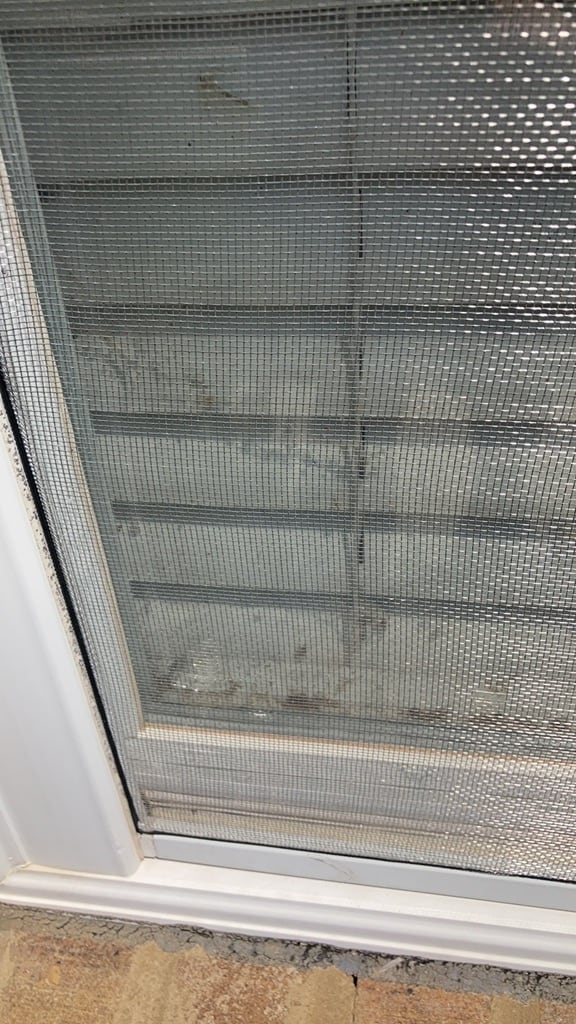
Collateral evidence like screens and soft metal is part of the same count. My carrier photographed the vent covers and pipe jacks too. Photo courtesy of Yellowhammer Roofing, from the author's own denied hail claim.
What to ask for, precisely
Vague requests get form letters. These do better:
- "The photo sheet for the inspection dated [date]." This is not the inspection report, and carriers that refuse the report will often release the photos. Mine ran 142 pages.
- "The test-square locations and hit counts for each slope." If test squares were run — and on a hail claim they almost always are — those counts exist somewhere in the file.
- "The date each photograph was taken." Mine were all from the first inspection. A second inspection that produced no new photographs is worth knowing about.
- "The name and licence of the inspector." My photo sheet credits the photographer as Anonymous User, through a field-inspection app. That is not sinister on its own, but you are entitled to know who assessed your property.
Then get the same three things from your contractor, in the same format, and compare them line by line.
What the comparison can show
When you lay the two sets side by side, one of a few things becomes visible, and each points somewhere different:
The squares were in different places. A slope can genuinely have a heavily struck section and a clean one. If the carrier squared the front slope and your roofer squared the left, they may both be right and still disagree. The fix is a reinspection with both parties present, squaring the same areas.
The counts differ on the same slope. Now somebody is miscounting, and the disagreement is decidable rather than rhetorical. This is the strongest position you can be in, and it is exactly what a reinspection with your roofer present resolves.
The counts agree but the conclusions differ. Then the argument is not about how many marks exist but whether they are functional damage — granule loss with a soft, bruised mat — or cosmetic. That is a real technical disagreement, and it is the one where an independent opinion or the appraisal process earns its cost.
No test squares were run at all. Rare, but it happens on quick inspections, and it is worth pointing out in writing.
The part that surprised me
I assumed a denial meant a careless inspection. The photo sheet says otherwise. Someone spent real time on my roof, ran squares on every slope, and documented the flashing, the vents, the valley, and the pitch. The documentation is better than most homeowners will ever see of their own claim.
The conclusion still came back as no damage, and the estimate still came back at $242.28 against a $2,500 deductible — which is a different denial than the one I thought I was fighting.
Thoroughness and agreement are separate things. A carrier can do a careful inspection and still reach a conclusion your contractor thinks is indefensible, and when that happens, more photographs from your side will not fix it. Only comparing the same measurement, on the same slope, will show where the disagreement actually lives.
If you are in this now
Ask for the photo sheet and the test-square counts. Ask your roofer for the same, in writing, per slope. Request a reinspection with your contractor present and offer dates. If the carrier's position still does not survive the comparison, that comparison is what you attach to a Department of Insurance complaint — a regulator reading two conflicting counts for the same slope on the same roof understands the problem immediately, in a way that a folder of close-up photographs never conveys.
The full timeline of my claim covers what happened next.
Go deeper
Working With an Insurance Adjuster: What to ExpectWhat happens during a roof inspection, what to have ready, questions to ask, and how company, independent, and public adjusters differ.
Not sure where your claim stands?
Describe the damage once and local roofing contractors can inspect it and give you an estimate.
Frequently asked questions
A marked-off area of roof, conventionally ten feet by ten feet, where an inspector counts the hail strikes inside the square and treats that count as representative of the slope. It is the standard method on both sides of a claim, which is what makes it useful: your contractor and your adjuster are doing the same exercise, so their results can be compared directly rather than argued about in the abstract.