Will Insurance Pay for Emergency Roof Tarping?
Yes — reasonable emergency tarping is a covered mitigation cost under nearly every homeowners policy, and doing it isn't optional. Here's how reimbursement works, what to document, and the post-storm tarp scams to avoid.
By Tim DunbarFounder, RoofClaim HQPublished
Water is getting in and the adjuster can't come for two weeks. Do you wait so they can see everything at its worst? No — you tarp it now, and your insurance almost certainly pays for it. This is one of the few claim questions with a genuinely clean answer, because the policy doesn't just allow emergency mitigation — it requires it.
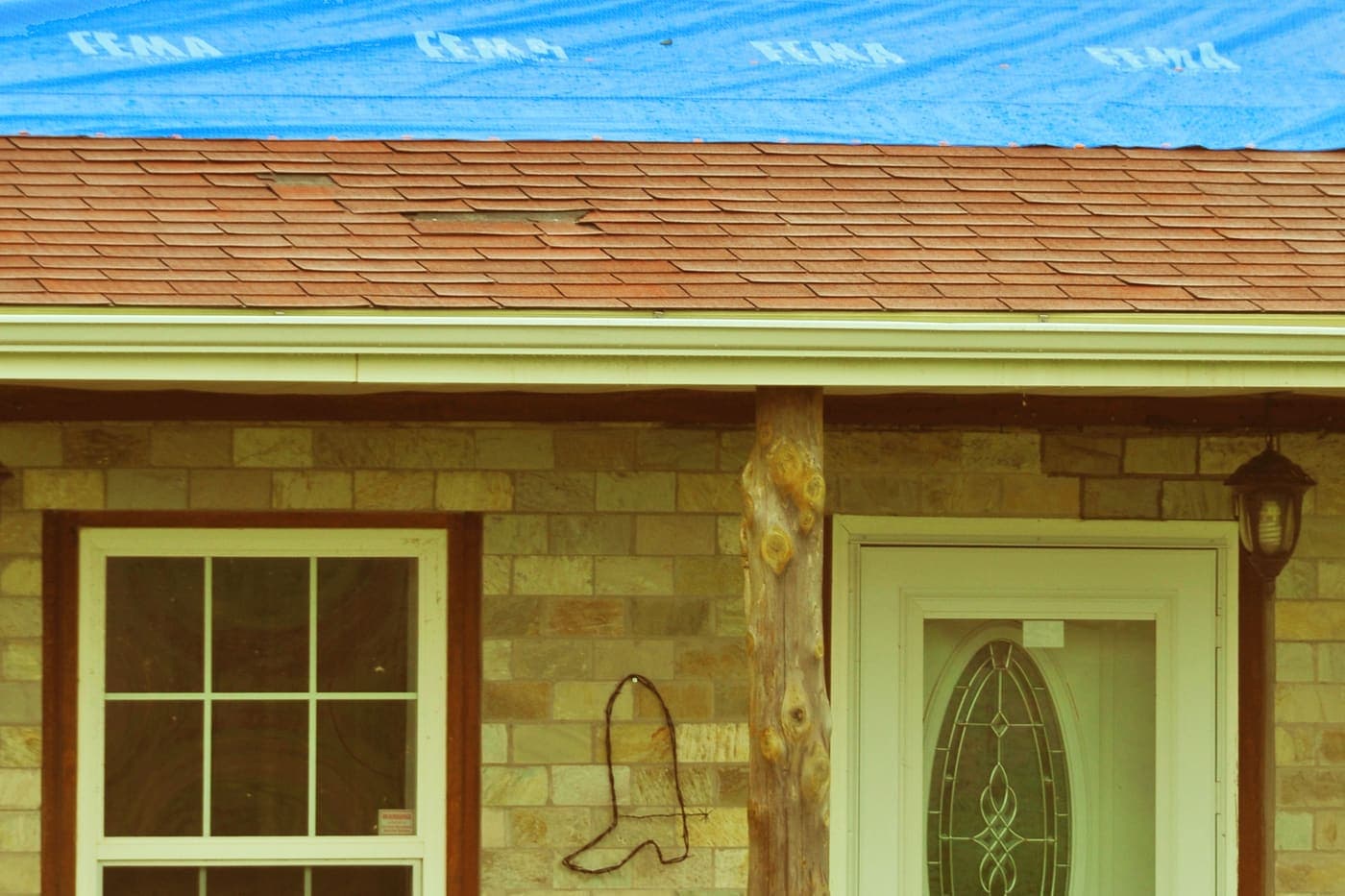
An emergency tarp protecting a storm-damaged slope until permanent repairs — exactly what your policy expects you to do. Photo: FEMA (public domain)
Your "duty to mitigate," in plain English
Every homeowners policy contains a version of the same clause: after a loss, you must take reasonable steps to protect the property from further damage. Storm tears a hole; you're expected to cover it. In exchange, reasonable costs of doing so are part of the covered loss — tarps, plywood, fasteners, and the labor to install them.
The flip side has teeth. Skip the tarp, and the water damage that follows — soaked insulation, ceilings, flooring — can be attributed to your failure to mitigate rather than the storm, and reduced or denied on that basis. Waiting "so the adjuster sees the leak" is a myth that costs people real money: document the leak with video, then stop it.
What the carrier expects (and pays)
Covered: reasonable emergency measures — tarping, board-up, temporary patching, water extraction, moving belongings out of harm's way. Not covered by the mitigation clause: permanent repairs done before inspection, which destroy the evidence the claim depends on. Tarp now; full repairs come after the adjuster.
Reimbursement is straightforward when you document:
- Photos and video first — the damage, the active leak, interior effects — timestamped before the tarp goes on. This is your proof of both the loss and the condition the tarp prevented from worsening.
- Every receipt — professional invoice, or materials if you safely DIY.
- Photos after — the installed tarp, which also documents workmanlike installation if a later storm tests it.
Then report the loss promptly and include the mitigation costs in the claim you file.
The post-storm tarp economy
Storm aftermath brings out two scams worth knowing:
- Gouged tarping — several-thousand-dollar invoices for an hour of work, targeting panicked homeowners. Carriers reimburse reasonable costs; the gouge margin can land on you.
- The tarp as a sales hook — "free tarp" offers that come with a contract signing over your claim, or contingency agreements buried in the paperwork. The tarp is bait; the catch is everything we cover in choosing a roofer. Accept emergency help; sign nothing beyond the emergency work itself.
A legitimate emergency tarp job: local company, itemized invoice, no pressure to commit to the full repair, no interest in your claim paperwork.
The one-line version
Tarp fast, document everything, keep receipts, sign nothing extra — and the cost folds into your claim exactly the way the policy intends.
Go deeper
How to File a Roof Damage Insurance Claim, Step by StepA step-by-step walkthrough of documenting damage, understanding filing deadlines, contacting your carrier, and avoiding the most common claim-filing mistakes.
Not sure where your claim stands?
Describe the damage once and local roofing contractors can inspect it and give you an estimate.
Frequently asked questions
Professional emergency tarping commonly runs a few hundred dollars for a straightforward job, rising with roof height, pitch, area, and after-hours urgency. Post-storm price gouging is real: if you're quoted several thousand dollars to stretch a tarp, get a second call in. Carriers reimburse "reasonable" mitigation costs — a wildly inflated tarp bill may only be partially reimbursed, leaving you holding the difference.