How Long Does a Roof Replacement Take After Insurance Approves It?
The tear-off and rebuild is usually one to three days. The wait is scheduling — a couple of weeks in a normal season, and months in a metro that just took a major hailstorm.
By Tim DunbarFounder, RoofClaim HQPublished
The claim is approved and you want the roof fixed. The actual work is short — one to three days for a typical house — but getting onto the schedule takes two to eight weeks in normal conditions, and considerably longer after a storm that hit the whole area.
The work itself is the fast part
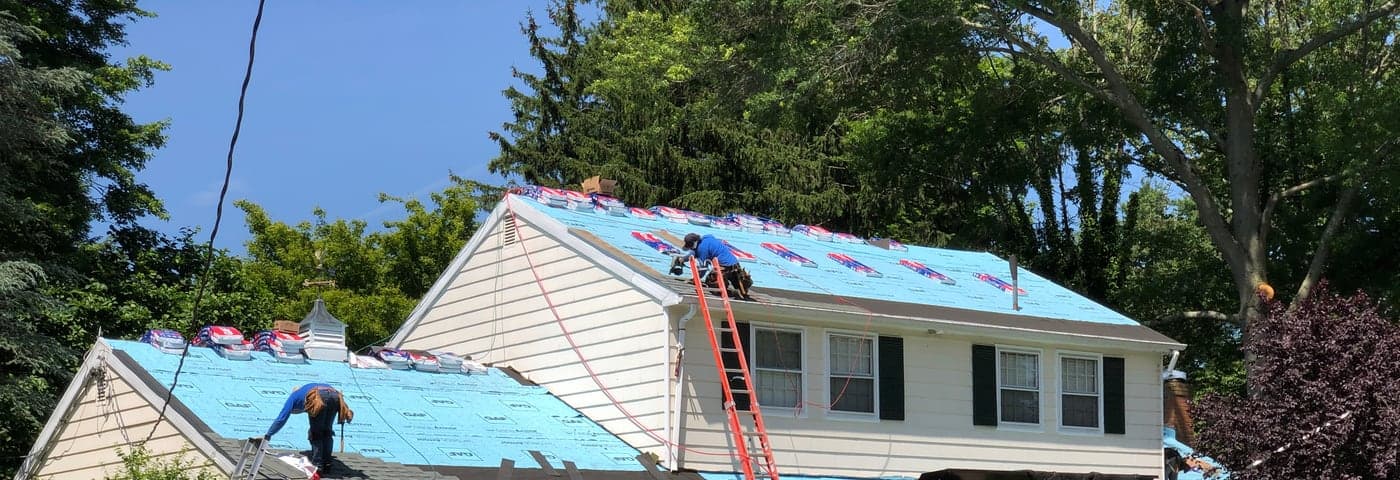
Tear-off done, underlayment down, bundles staged on the slope — this is most of a day's visible progress on an average home. Photo: Famartin, CC BY-SA 4.0
For an average single-family home with a straightforward asphalt shingle roof, a competent crew tears off and rebuilds in one to three days. Larger, steeper, or more complex roofs, and materials like tile, slate, or metal, run longer — sometimes a week or more.
A rough sequence:
- Day before: materials delivered, dumpster placed
- Day one: tear-off, decking inspection, underlayment
- Day one or two: shingles, flashing, ridge and ventilation
- Final day: cleanup, magnetic sweep for nails, walkthrough
- After: permit inspection where required
Decking replacement is the common surprise. Rot or damage isn't visible until the old roofing is off, and it can add a day and a supplement to the claim.
The queue is the slow part
In an ordinary season, established contractors book two to eight weeks out. That's the normal state of a healthy business.
After a significant hail or wind event, the arithmetic breaks. Thousands of roofs are damaged in one afternoon, and the number of qualified crews in the region doesn't change. Backlogs of two to four months are common, and in severe events longer.
This is where a long wait becomes a good signal. A well-regarded local company being booked out is demand. A contractor with a crew available tomorrow, immediately after a regional storm, is worth understanding before you sign — many of them followed the storm in, and they will not be in your state when a warranty question comes up in three years. Vetting the contractor matters more here than at any other point.
What moves you up the schedule
- Sign the contract promptly once you've chosen. Position in the queue is usually set by contract date, not by first conversation.
- Settle the scope first. Crews don't get scheduled against an unapproved estimate, so an unresolved gap is a scheduling delay as much as a money problem.
- Be flexible on dates. Weather forces constant reshuffling, and the homeowners who can absorb a two-day shift get slotted into gaps.
- Handle the permit paperwork quickly if it needs your signature.
- Don't wait on the money to book. Contractors schedule against contracts, not against when your check clears.
Watch the deadline while you wait
This is the part that costs people real money. Your policy has a completion deadline, and it usually runs from the date of the storm — so a long contractor backlog eats into a window that started before you filed.
If the schedule is going to push you past it, request an extension in writing before the deadline rather than after. Carriers grant them routinely for documented storm backlogs. They are much less accommodating once the date has passed.
Signs a contractor is overcommitted
A backlog is fine. These are not:
- Repeatedly rescheduled start dates with no explanation
- Large deposits requested well before any material is ordered
- Crews you can't get information about, subcontracted at the last minute
- No named point of contact once the contract is signed
- Pressure to sign a contingency agreement before the claim is settled
The timeline in one list
- Claim approved and scope settled — this gates everything downstream.
- Sign the contract to take your place in the queue: two to eight weeks normally, months after a regional storm.
- Work itself: one to three days for a typical asphalt roof.
- Permit inspection where required.
- Submit invoice and completion photographs to release the withheld depreciation.
- Track the policy completion deadline the whole way, and extend early if the backlog threatens it.
Go deeper
How to Choose a Legitimate Roofing ContractorStorm chasers and deductible waivers, what a real contract includes, how to verify licensing and insurance, warranties, and payment schedules.
Not sure where your claim stands?
Describe the damage once and local roofing contractors can inspect it and give you an estimate.
Frequently asked questions
Not on a tear-off. Once the old roofing is stripped, the decking is exposed, and opening a roof ahead of rain risks far more damage than the delay costs. Expect crews to postpone for forecast rain and to work in fair-weather windows, which is a large part of why spring and early summer scheduling slips so much.