What Is a Supplement in a Roof Insurance Claim?
A supplement is a documented request to add legitimately missed or newly discovered costs to an approved claim. It's a normal part of the process — here's how it works and how to tell normal from padding.
By Tim DunbarFounder, RoofClaim HQPublished
Midway through your roof replacement, your contractor says: "We found rotten decking — we're submitting a supplement to your insurance." Nobody explained what that means, and it sounds vaguely like trouble. It isn't. A supplement is a documented request to add missed or newly discovered costs to an already-approved claim, and it's one of the most routine events in insurance restoration.
Why the first estimate is almost never the final number
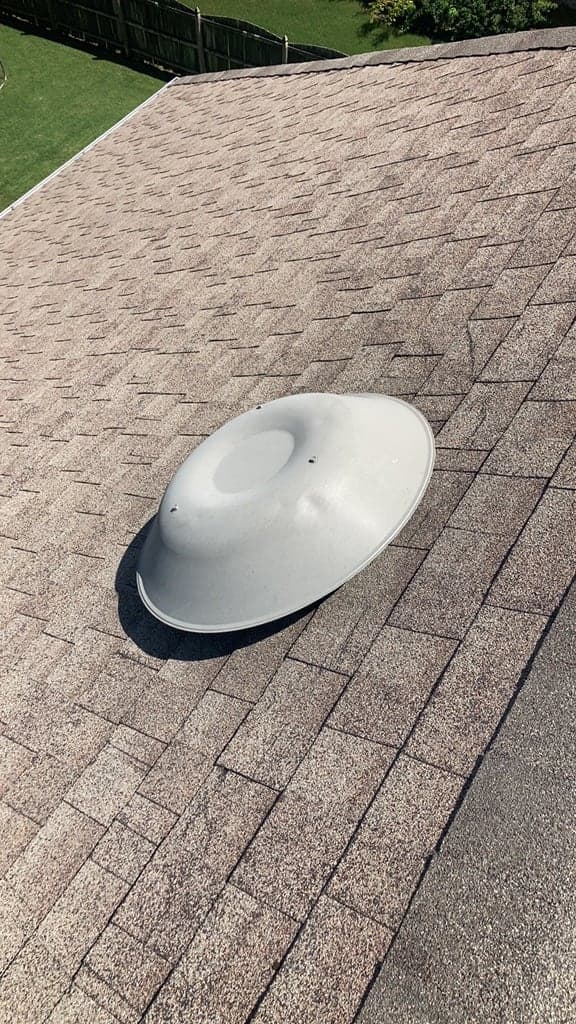
Soft-metal damage like this vent cap is routinely missed on a first pass and picked up later as a supplement. Photo courtesy of Yellowhammer Roofing, from the author's own denied hail claim.
The adjuster's initial estimate is built from a rooftop inspection and pricing software — without lifting a single shingle. Predictably, it misses things:
- Hidden damage. Rotten or broken decking, saturated underlayment, damaged flashing — conditions nobody can see until tear-off.
- Code-required upgrades. Modern codes often require things the old roof didn't have: ice-and-water shield along eaves, drip edge, updated ventilation. If your policy includes ordinance-and-law coverage, these are claimable — and they're a classic estimate omission.
- Scope misses. Undercounted squares, forgotten accessories (vents, pipe boots, satellite remounts), steep-slope or multi-story labor charges, disposal costs.
- Price movement. Material prices between estimate and installation.
An initial estimate that survives contact with tear-off unchanged is the exception, not the rule.
How the process works
- Discovery and documentation. The crew photographs the condition before covering it up — the load-bearing step. Undocumented discoveries make weak supplements.
- Submission. The contractor sends the carrier an itemized supplement: photos, quantities, code citations where relevant, priced in the same estimating software the adjuster used.
- Carrier review. Approval on paper for routine items; for larger supplements, sometimes a re-inspection. Typically one to three weeks per cycle.
- Reconciliation. Approved supplements are added to the claim and flow through the final invoice — which also drives the release of your recoverable depreciation.
Note who's doing the work here: the contractor. A good insurance-experienced roofer handles supplements as a matter of course — it's one of the things worth verifying before you hire. Your job is mostly to stay informed and forward any carrier correspondence promptly.
Normal vs. padding
Supplements have a legitimate core and an abusable edge. Normal: photographed decking rot, cited code requirements, measurable scope corrections. Padding: undocumented line items, quantities that don't match your roof, or supplements engineered to absorb your deductible — which is fraud, not paperwork.
If the carrier pushes back on a legitimate, documented supplement and won't move, the escalation tools are the same as any underpayment dispute: written rebuttal, reinspection request, and the appeal path beyond it.
Go deeper
Working With an Insurance Adjuster: What to ExpectWhat happens during a roof inspection, what to have ready, questions to ask, and how company, independent, and public adjusters differ.
Not sure where your claim stands?
Describe the damage once and local roofing contractors can inspect it and give you an estimate.
Frequently asked questions
It depends on your contract with the roofer. Most insurance-restoration contracts price the job at "insurance proceeds plus your deductible," meaning denied supplements are the contractor's problem to absorb or to appeal — but read your agreement, because some contracts make you responsible for the full scope regardless of what insurance approves. Ask this question before signing: "If a supplement is denied, who pays?"