How Long Does an Adjuster Take to Inspect a Roof?
Most carriers get an adjuster on the roof within a couple of weeks of filing — unless a hailstorm hit the whole metro, in which case surge backlogs stretch that to a month or more. How to move up the queue.
By Tim DunbarFounder, RoofClaim HQPublished
You filed the claim and now you're waiting for someone to actually look at the roof. Most carriers schedule an inspection within a few days to a couple of weeks of filing — but after a storm that hit an entire metro, surge backlogs routinely push that to three or four weeks.
The normal window
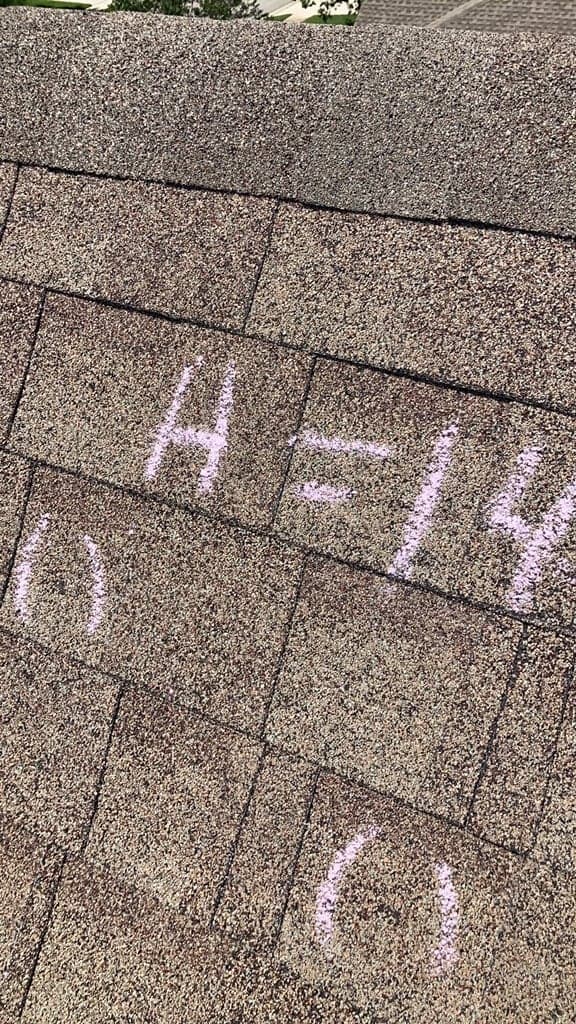
The output of a roof inspection: slope A, fourteen hits counted and circled in a single test square. The number in the chalk is what the claim turns on. Photo courtesy of Yellowhammer Roofing, from the author's own denied hail claim.
Two clocks run here, and they're different.
Most states require the carrier to acknowledge your claim quickly — often within ten to fifteen days — which is the call or letter confirming the claim exists and assigning an adjuster. That is not an inspection. The inspection is scheduled after assignment, and in ordinary conditions it usually lands within a couple of weeks of filing.
If you filed and heard nothing at all inside the acknowledgment window, that's the first genuine warning sign — not the inspection itself taking time.
The catastrophe window
After a widespread hail or wind event, everything changes. Carriers deploy surge teams of independent adjusters, triage thousands of claims at once, and the wait that is normally days becomes weeks.
This is the strongest practical argument for filing promptly rather than deliberating. Queues are worked roughly in the order claims arrive, so filing a week late doesn't cost you a week — it puts you behind everyone who filed during that week, which after a major storm can be thousands of households.
How to actually move up the queue
Adjusters route geographically and schedule around availability. That gives you more leverage than most homeowners use:
- Offer several windows, not one. Flexibility gets you slotted into an existing route. A single narrow demand gets you skipped.
- Answer the phone. Surge adjusters often call from unfamiliar numbers and move on quickly if nobody picks up.
- Return document requests the same day. Most delay in claims is queue time, and the files that move fastest are the ones where the carrier is never waiting on the homeowner.
- Ask for the adjuster's direct number at assignment. Going through the main claims line every time costs you days.
Have this ready before they arrive
The inspection is short. What you hand over during it shapes the outcome more than anything you say:
- Dated photographs of the damage, taken as soon after the storm as you have.
- The date of the storm, and any local news or weather record confirming it.
- Documentation of every slope, plus gutters, vents, screens, and other soft metal — collateral damage on those surfaces is often what establishes a hail event occurred.
- Any prior roof work, invoices, or inspection reports.
- Interior photographs if there's staining or attic moisture.
Be there in person if you possibly can, and read what to expect from the inspection itself beforehand. An adjuster walking a roof alone reaches conclusions you never get to discuss.
If it drags past a month
With no catastrophe in your area and no inspection after several weeks, escalate in writing. Ask for the adjuster's name and supervisor, state the filing date, and request a scheduled inspection date in the reply. Written requests create a record that phone calls don't, and a claim file showing dated unanswered requests moves differently than one that doesn't.
Remember the inspection is one stage of a longer process — the full claim timeline runs well past it, so a delay here pushes everything downstream.
The timeline in one list
- File the claim. Note the date.
- Acknowledgment and adjuster assignment — commonly within ten to fifteen days.
- Inspection scheduled — days to a couple of weeks normally, three to four weeks or more after a regional storm.
- Offer flexible windows, keep your phone on, and have your documentation assembled before the visit.
- Nothing after a month with no local catastrophe → escalate in writing to the adjuster's supervisor.
Go deeper
Working With an Insurance Adjuster: What to ExpectWhat happens during a roof inspection, what to have ready, questions to ask, and how company, independent, and public adjusters differ.
Not sure where your claim stands?
Describe the damage once and local roofing contractors can inspect it and give you an estimate.
Frequently asked questions
You can request one, and you should. Adjusters schedule around their route, so flexibility helps you more than precision does — offering several workable windows usually gets you seen sooner than insisting on one. Say plainly that you intend to be present and want your roofer there; carriers accommodate that routinely.