What Size Hail Damages a Roof?
Hail around 1 inch (quarter-sized) is the common damage threshold for asphalt shingles — but roof age, shingle type, and wind speed can move that line dramatically in either direction.
By Tim DunbarFounder, RoofClaim HQPublished
The short answer: hail around 1 inch in diameter — quarter-sized — is the commonly cited threshold where asphalt shingle damage becomes likely. But that number moves a lot depending on your roof's age and material, and smaller hail with strong wind behind it can damage a roof that "should" have survived.

Mixed pea- to quarter-sized hail — right at the damage threshold for older asphalt roofs. Photo: Bdahl (public domain)
Hail size reference chart
| Hail size | Compared to | Typical risk to asphalt shingles |
|---|---|---|
| 0.5" | Marble | Rarely functional damage; may scuff aging roofs |
| 0.75" | Penny | Possible on old or brittle shingles, soft metals dent |
| 1" | Quarter | Common damage threshold — inspection worth it |
| 1.25" | Half dollar | Damage likely on most asphalt roofs |
| 1.5" | Ping-pong ball | Damage very likely, including newer roofs |
| 1.75" | Golf ball | Widespread damage expected, punctures possible |
| 2.5"+ | Tennis ball+ | Severe damage to nearly any roofing material |
Why roof age matters as much as hail size
A five-year-old architectural shingle is flexible and heavily granulated — it absorbs a quarter-sized stone without functional damage more often than not. A twenty-year-old three-tab shingle is brittle, thin, and has already shed much of its protective granule layer. The same stone that bounces off the new roof can bruise or crack the old one.
This is why two neighbors can experience the same storm with opposite outcomes, and why "my neighbor's claim was approved" doesn't guarantee yours will be — or vice versa.
Material matters too
- Asphalt shingles — the 1-inch rule of thumb applies. Damage shows as dark "bruises" where granules were knocked away, exposing the mat.
- Metal roofing — dents from smaller hail are common but often classified as cosmetic, which some policies exclude. Functional damage (broken seams, punctures) usually takes larger stones.
- Wood shakes — split along the grain from roughly 1.25" hail.
- Tile and slate — very impact-resistant until they crack outright, typically from stones 1.5" and up.
- Class 4 impact-resistant shingles — designed to survive 2" simulated hail. Real-world large hail can still damage them, but the threshold is much higher.
Wind is the multiplier across all of these: a 0.75" stone in a 60 mph gust hits with far more energy than the same stone falling straight down.
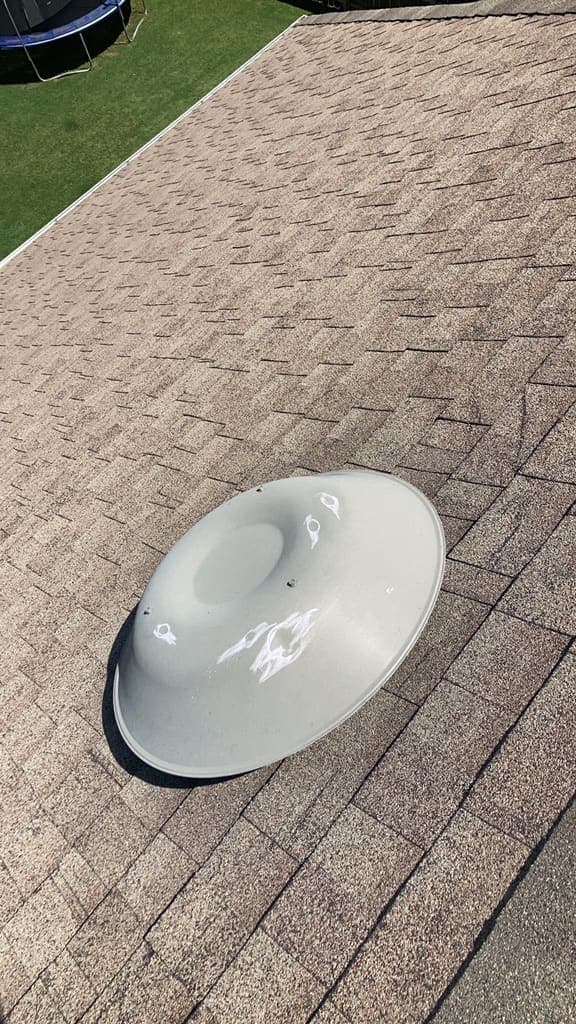
Soft metal tells the truth: a vent cap dented by hail. Metal like this dents at sizes that may or may not damage shingles — which is why adjusters check it first. Photo courtesy of Yellowhammer Roofing, used with permission.
What to do if your hail was near the threshold
If the hail at your address was 1 inch or larger — or smaller but wind-driven onto an older roof — it's worth checking for the specific damage signs and getting a professional inspection before deciding anything about a claim. Not sure what actually fell at your address? Here's how to check the public storm records. Look at ground-level evidence first: dented gutters and downspouts, dinged window wraps, and splatter marks are the same clues an adjuster will use to confirm hail occurred at your property.
And before you call your insurer, know that filing has a process and a sequence — inspecting first and filing second is usually the better order.
Go deeper
How to Identify Hail and Wind Damage on Your RoofWhat hail and wind damage actually look like, what adjusters look for, the difference between cosmetic and functional damage, and how to document it.
Not sure where your claim stands?
Describe the damage once and local roofing contractors can inspect it and give you an estimate.
Frequently asked questions
Yes, in the right conditions. Older asphalt shingles that have lost granules and flexibility, three-tab shingles near the end of their life, and soft aluminum components can all show functional damage from hail in the 0.75-inch range, especially when driven by strong wind. Newer architectural shingles usually shrug that size off, but "usually" is not "always" — a quick inspection settles it.