Should You File a Claim for a Few Missing Shingles?
The honest math on small wind claims: when the repair costs less than your deductible plus the claim-history cost, don't file — and when a few missing shingles are the visible edge of something bigger, do.
By Tim DunbarFounder, RoofClaim HQPublished
A gust took a few shingles off and now there's a bare patch on your roof. Should insurance be involved? Usually no — but the exceptions matter, and one of them is expensive to miss.
The basic math
A claim only makes financial sense when the covered damage meaningfully exceeds your deductible. Small wind repairs usually run a few hundred dollars; wind/hail deductibles today are commonly $1,000–$2,500, and percentage deductibles (1–2% of dwelling coverage) can be far higher — 1% of a $400,000 dwelling is $4,000.
$600 repair, $2,000 deductible → the claim pays $0 and you've spent a claim record for nothing. That record isn't free: it can cost you claim-free discounts and count toward non-renewal thresholds for years. Filing $0-payout claims is the worst deal in insurance.
So the first move is never calling the insurer — it's getting a local roofer to quote the repair, so you know which side of the deductible you're on. (And be careful even asking your carrier — claim-line inquiries can generate claim records. Questions go to your agent; claims go to the claims line.)
The same arithmetic governs any roof loss, not just a few shingles. The general version of this decision works through what a claim record actually costs you over five years, and when the damage type overrides the math entirely.
When a few missing shingles justify a claim
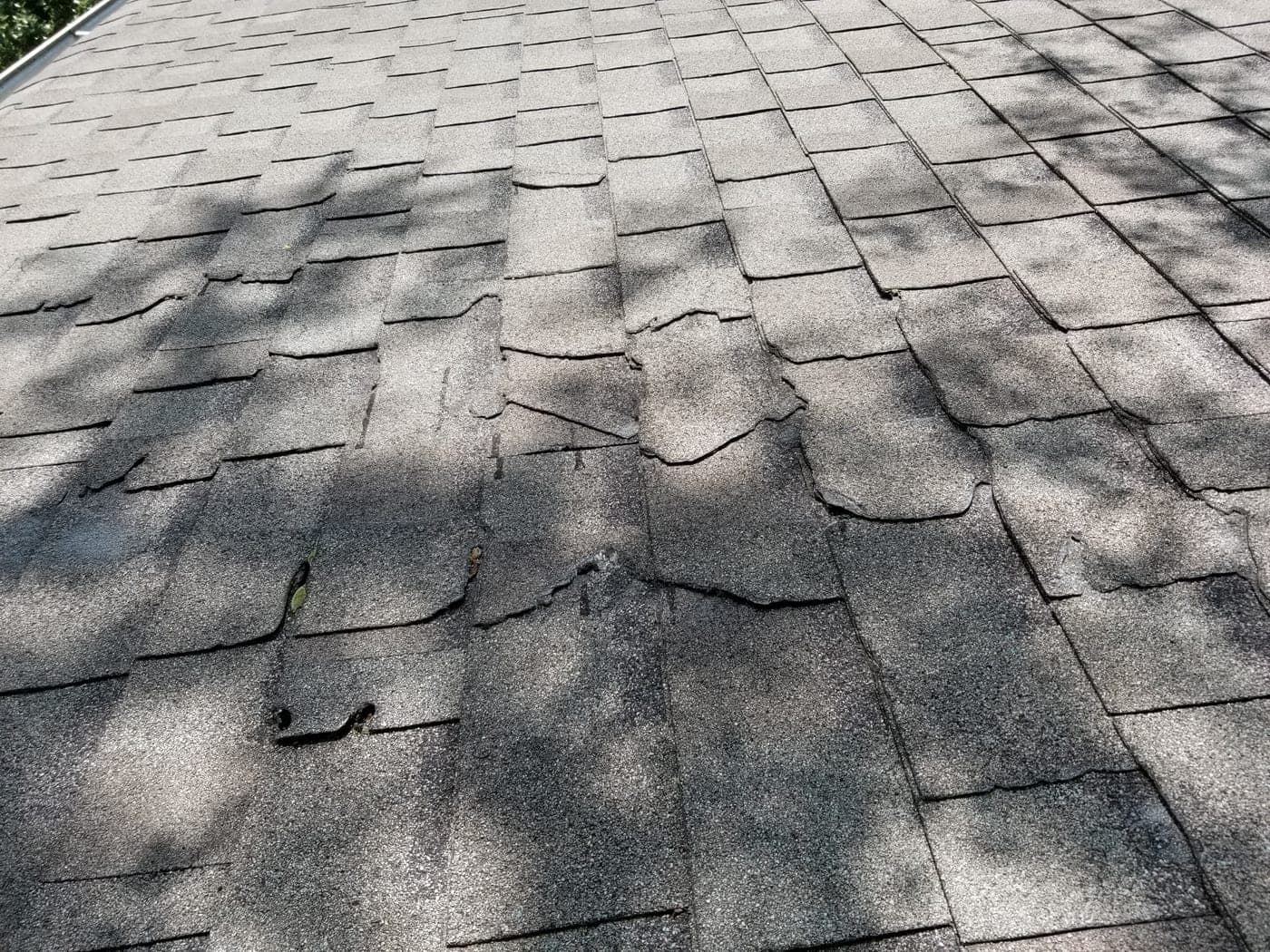
The tell is not the bare spots — it's how many surrounding tabs are creased and lifted. Those have lost their seal and will go in the next storm. Photo: Samuel Bolton, CC BY-SA 4.0
The visible damage isn't the whole damage. Wind strong enough to tear shingles off often creases and lifts many more — shingles that lost their seal bond and will fail in the next storm. A blown-off patch plus widespread creasing across slopes is a roof replacement argument, not a $600 repair. This is the expensive exception: have a roofer inspect the whole roof, not just the bare spot.
Matching turns repairs into replacements. If your shingle is discontinued and can't be reasonably matched, some states and policies require the insurer to address the mismatch — sometimes replacing far more than the damaged area. A small repair quote can become a large claim once the matching problem enters the picture.
Water got in. Interior staining, wet decking, or attic moisture means the loss is bigger than shingles, and it belongs in a claim before it grows.
If you don't file, still fix it fast
An open patch is an active leak path. Waiting converts a few hundred dollars of shingles into decking rot and ceiling repairs — and a delayed claim for that damage runs into failure-to-mitigate and late-filing problems. Pay for the small repair, keep the invoice and photos; that paper trail also protects your next real claim by showing the roof was maintained.
The decision in one list
- Photograph the damage and check the whole roof (or have a roofer do it).
- Get a repair quote from an established local contractor — not a door-knocker.
- Quote clears your deductible by a wide margin, or there's widespread wind damage, matching trouble, or water intrusion → file properly.
- Otherwise → pay out of pocket, keep records, and save your claim history for a loss that needs it.
Go deeper
How to File a Roof Damage Insurance Claim, Step by StepA step-by-step walkthrough of documenting damage, understanding filing deadlines, contacting your carrier, and avoiding the most common claim-filing mistakes.
Not sure where your claim stands?
Describe the damage once and local roofing contractors can inspect it and give you an estimate.
Frequently asked questions
A small, straightforward repair — replacing a handful of blown-off shingles on an accessible slope — commonly runs a few hundred dollars, occasionally up to around a thousand with steep pitches, matching difficulties, or minimum service charges. Get two local quotes; the number is usually well under a typical wind/hail deductible.