Can I File a Roof Claim After the Repair Is Already Done?
You can file, but you've made it much harder on yourself. With the damage gone, the claim rests entirely on what you documented before the work — and emergency repairs are treated differently.
By Tim DunbarFounder, RoofClaim HQPublished
The roof got fixed and now you're wondering whether insurance will still cover it. You can file — nothing prevents it — but you've given up the carrier's ability to inspect the damage, and the claim now rests entirely on the documentation you happened to keep.
Why carriers push back on this
An adjuster's job is to confirm three things: that damage exists, that a covered event caused it, and what it costs to fix. A completed repair removes the evidence for the first two.
The carrier isn't being obstinate. Causation is the genuinely contested question in roof claims — whether that damage came from Tuesday's hail or from fifteen years of weathering, which wouldn't be covered. Once the old roofing is in a dumpster, nobody can answer that by looking.
So the question isn't whether you're allowed to file. It's whether what you kept is enough to carry the claim without an inspection.
Emergency repairs are a separate category
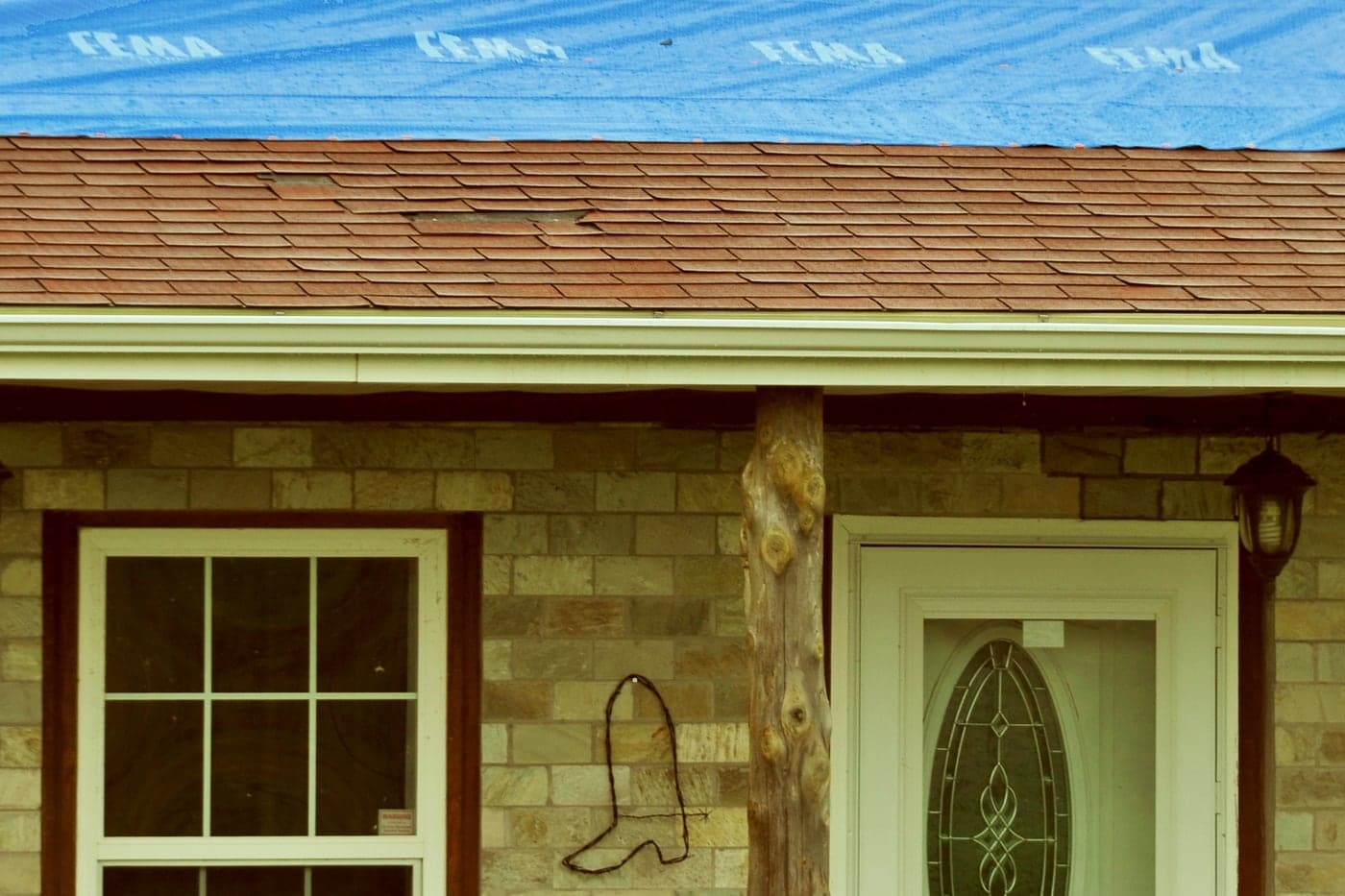
A tarp over the damaged slope with the torn shingles still visible underneath. Temporary work like this protects the claim rather than undermining it. Photo: FEMA (public domain)
If what you did was emergency mitigation — tarping, sealing an active leak, boarding an opening — you're in a much stronger position, because your policy required you to do it. Preventing further damage is an explicit duty after a loss, and carriers expect it.
Better still, tarping leaves the underlying damage intact for inspection. The mitigation cost itself is usually reimbursable on top of the repair. Keep the receipt and photograph what you covered before you cover it.
The hard case is a full permanent repair completed before the carrier ever saw the roof. That's where claims fail.
What can still carry the claim
Assemble everything you have, in roughly this order of weight:
- Dated photographs from before the repair, ideally multiple slopes and close enough to show the damage pattern. Phone photos carry embedded timestamps, which helps considerably.
- A written inspection report from the roofer, describing what was found, on which slopes, and their assessment of the cause.
- The itemized invoice showing what was actually replaced.
- Storm verification — NOAA's storm events database, local news, neighbors' claims on the same street from the same date.
- Any material the roofer kept. Established contractors routinely photograph tear-offs for exactly this reason. Ask before you assume they didn't.
- Adjacent evidence that survives, which people forget: dented gutters, screens, vents, and other soft metal often weren't replaced and still show the hail strike.
That last one is genuinely useful. If the gutters are still up and still dented, an adjuster can inspect something.
When it isn't worth pursuing
Be honest about the odds:
- No pre-repair photographs and no written report. An invoice alone rarely carries it.
- The repair cost is near your deductible. You'd be spending a claim record on a small or zero recovery.
- The storm date is well past your filing window. That's a separate bar and it applies regardless of the repair.
- The roof was already old and worn. Without evidence, this lands in wear-and-tear territory by default.
Remember a filed claim creates a record even when it pays nothing. Run that math before filing a weak claim on principle.
Filing it anyway
If the documentation is there, file it properly rather than apologetically:
- Report it with the storm date, not the repair date.
- Say plainly and early that repairs are complete, and why. Emergency necessity is a good reason; not knowing you could claim is a truthful one. Don't let it surface later as a surprise.
- Submit the documentation package up front rather than waiting to be asked.
- Expect an inspection anyway — of what remains, and of the work.
- If it's denied on causation and your evidence is genuinely strong, the appeal route runs through a written reconsideration to your state regulator.
The lesson for next time
Photograph the damage before anyone touches it, get the inspection in writing, and file before you repair. The sequence costs nothing and is the entire difference between a routine claim and this one.
Go deeper
How to File a Roof Damage Insurance Claim, Step by StepA step-by-step walkthrough of documenting damage, understanding filing deadlines, contacting your carrier, and avoiding the most common claim-filing mistakes.
Not sure where your claim stands?
Describe the damage once and local roofing contractors can inspect it and give you an estimate.
Frequently asked questions
Not automatically, but the carrier has lost its ability to verify the loss independently, and that shifts the burden onto your evidence. Well-documented post-repair claims do get paid, particularly emergency work. Thinly documented ones usually don't, because there's nothing left for an adjuster to inspect and nothing on file to substitute for it.